


Matt Morrise here from Morrise Thompson Foresta Legal. Today, I want to dive into a topic that hits close to home for anyone in digital forensics: the Netflix documentary Unknown Number: The High School Catfish. This film isn’t just a compelling story; it’s a stark reminder of the critical role digital forensics plays in uncovering truth in an increasingly interconnected world.
The Story of a Digital Deception
For those who haven’t seen it, Unknown Number chronicles the bewildering and heartbreaking case of a group of high school students in a small Michigan town who fell prey to a sophisticated and relentless catfish operation. What started as a few text messages from an “unknown number” quickly escalated into a web of manipulation and emotional abuse, upending the lives of multiple students and families.
The catfisher exploited friendships, trust, and the digital landscape to sow discord, control narratives, and inflict immense psychological harm. The documentary reveals how this digital puppeteer orchestrated chaos, leading to real-world consequences for the victims and their families.
When the Digital World Becomes a Crime Scene
As a digital forensic investigator, my immediate question when watching Unknown Number was, “What digital footprints could lead to the catfisher?” In cases like this, digital tracks like text messages, call logs, social media interactions, and IP addresses leave a trail for a digital forensic investigator to follow. But without the ability to meticulously collect, preserve, and analyze these digital tracks, the trail goes cold.
The Investigator’s Toolkit: Unmasking the Unknown
When faced with complex digital evidence, the specialized tools and techniques of digital forensics become absolutely indispensable.
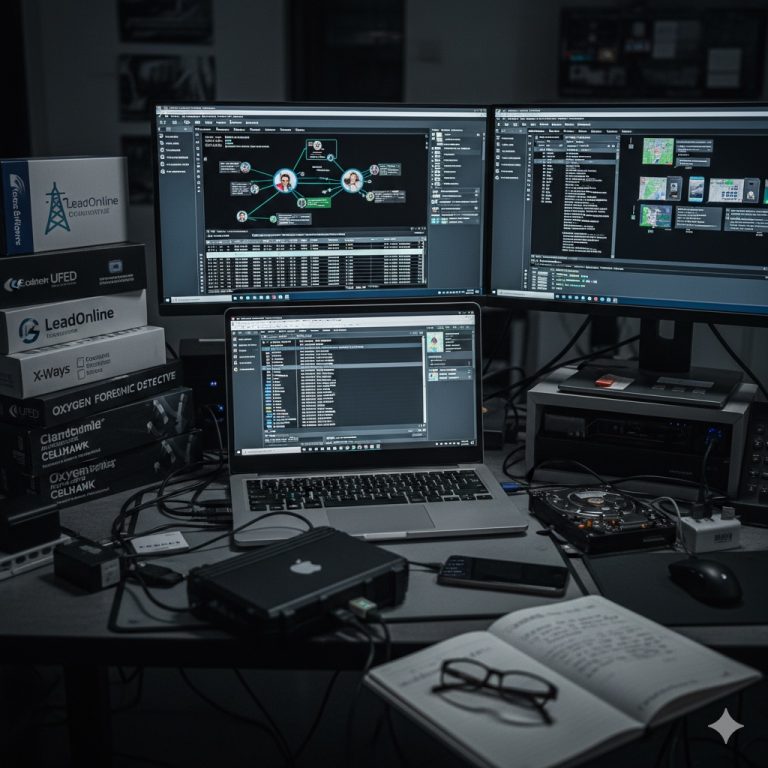
For instance, when dealing with mobile devices, tools like Cellebrite Inseyets, Oxygen Forensic Detective, or Elcomsoft iOS Forensic Toolkit are paramount. Depending on the parameters of a case, these platforms assist us in extracting a vast amount of data from phones, including messages, call histories, app data, location information, and in some cases even deleted data. Imagine the crucial insights gained from examining the devices of the students in the Unknown Number case – every message sent, every call received, could hold a vital clue.
In situations where computers or external drives are used to manage multiple fake profiles, tools like X-Ways Forensics or Exterro FTK help us image and analyze disks, uncover hidden files, recover deleted data, and identify system activity that points to the users’ actions.
If the investigation requires us to understand geographical movements or patterns of communication, LeadsOnline Cellhawk would be invaluable. This tool specializes in analyzing cell tower and GPS data, allowing us to map the location of devices at specific times. In Unknown Number, understanding the physical proximity of other mobile devices when the catfish messages were sent could have been a game-changer in narrowing down the person responsible.
Beyond the Tools: The Forensic Mindset
While these tools are powerful, they are only as effective as the investigator wielding them. Digital forensics isn’t just about pushing buttons; it’s about a meticulous, systematic approach to evidence. It’s about understanding how data is generated, how it is stored, how it can be manipulated, and how to recover it in a forensically sound manner to ensure its admissibility in
court.
The Unknown Number documentary serves as a stark reminder that the digital world, while offering incredible connectivity, also presents new avenues for deception and harm. As digital forensic investigators, our mission is to bring clarity to these complex digital landscapes, to expose the truth hidden within the zeros and ones, and ultimately, to help bring evidence to light.
If you have any questions about digital forensics or how we can assist you, please don’t hesitate to reach out to Morrise Thompson Foresta.